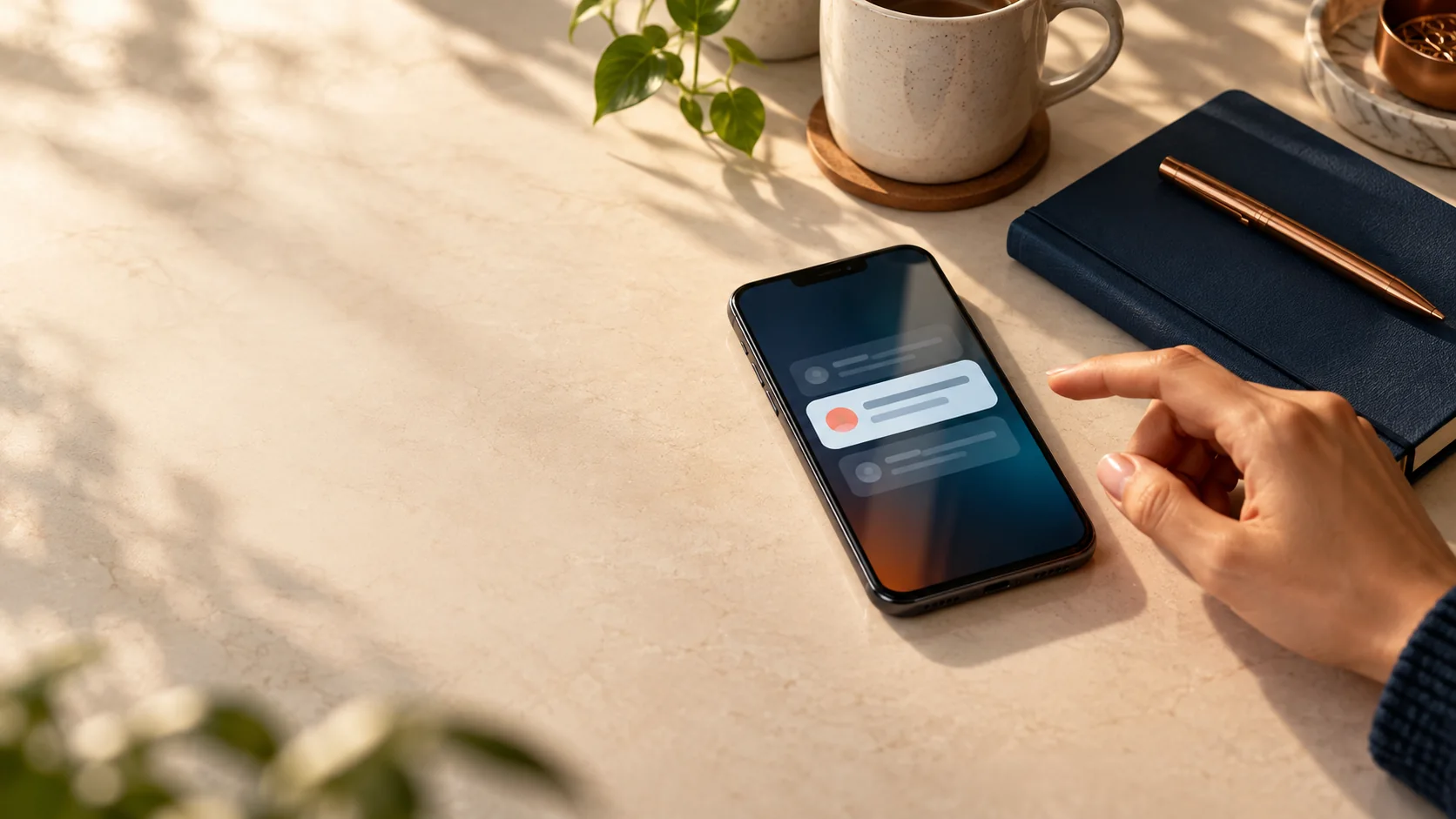
THE BANK ALERT
“Was this charge yours?”
A text or caller claims your account is at risk and urges you to move money or share a code before you can think.
The better move: contact your bank through a number you found yourself.
FRAUD DEFENSE FIELD GUIDE + WORKBOOK
The bank alert. The delivery text. The call that sounds like someone you love. Fraud works by rushing ordinary people through an extraordinary moment. Build a way to pause, check, and choose your next step.
Practical education. Clear actions. No promise that any guide can prevent every scam.
01 / THE MOMENT
These are examples of common scam approaches, not messages from real people. The details change; the pressure to respond quickly is familiar.
THE BANK ALERT
A text or caller claims your account is at risk and urges you to move money or share a code before you can think.
The better move: contact your bank through a number you found yourself.
THE DELIVERY TEXT
It looks routine, especially when you are expecting a delivery. One tap can lead to a fake payment or sign-in page.
The better move: open the carrier's site or app directly.
THE FAMILY EMERGENCY
A familiar name, a convincing voice, an urgent request. The story may be crafted to keep you from checking with anyone else.
The better move: call your loved one on a number you already know.
THE EASY MONEY OFFER
A job or task offer seems simple until you are asked to pay to unlock work or withdraw supposed earnings.
The better move: step back before sending money or personal details.
Scenario patterns are informed by FTC phishing guidance, FTC text-message guidance, and FTC task-scam guidance.
THE PROBLEM ISN'T THAT YOU WEREN'T CAREFUL
Fraud often borrows familiar names, ordinary routines, and real emotions. You don't need to memorize every new trick. You need a way to slow the decision down when the stakes feel high.
02 / THE METHOD
The Field Guide's Logic Gate turns a stressful moment into four questions you can work through in order.
Notice the rush, fear, flattery, or pressure. Give yourself permission to pause.
Check through a channel the requester does not control.
Ask whether the story still makes sense when you explain it out loud.
Proceed through a verified route, wait for missing facts, or end the contact.
The four-step Logic Gate is taught in the Fraud Defense Field Guide and practiced throughout the toolkit.
03 / WHAT CHANGES
The goal is a repeatable habit and a calmer first response when a request feels wrong.
See the complete bundleRecognize the pressure tactics behind a request, even if the message looks polished.
Verify a bank, delivery, job, or family claim without using the contact details in the suspicious message.
Build better routines for important accounts and a personal rule for urgent requests.
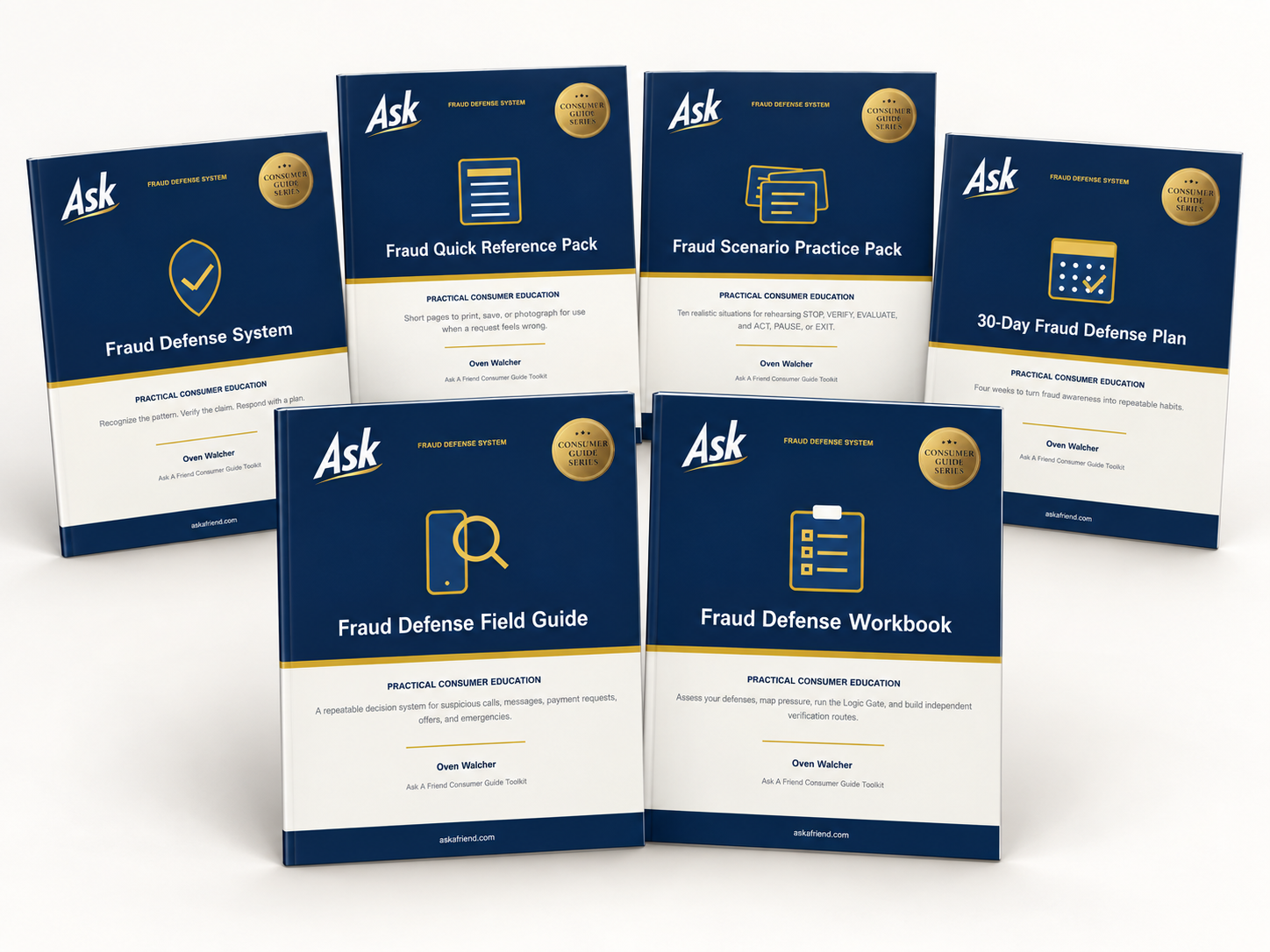
Six digital PDF resources for learning, practice, and quick reference.
04 / THE CORE OFFER
Learn the decision method, then put it to work on situations you may actually face.
A concise decision system for suspicious calls, messages, payment requests, offers, and emergencies. It teaches how to recognize pressure and verify independently.
Self-assessment, pressure maps, Logic Gate worksheets, and independent-verification drills that help turn the guide into your own process.
The download also includes a Start Here guide that shows you where to begin.
See the bonuses05 / INCLUDED BONUSES
Three ready-made PDFs extend the guide and workbook with practice, quick reminders, and a month of small actions.
Ten realistic situations for rehearsing the Logic Gate before you read the answer guidance.
Short pages to print, save, or photograph for use when a request feels wrong.
Four weeks of small steps to move fraud awareness into repeatable habits.
WHO IT'S FOR
COMMON QUESTIONS
No. The toolkit is designed for preparation and for evaluating suspicious requests in the moment.
It is a personal-use digital toolkit containing six PDFs: Start Here, the Field Guide, the Workbook, and the three bonus resources described above.
No guide can promise that. The aim is to improve how you check a claim and choose a response; outcomes depend on the situation.
No. It is consumer education. For an active incident, use current official resources and seek qualified help for your particular situation.
The price, checkout, delivery, and refund terms are being finalized. This page is a preview of the offer.
A CALMER NEXT STEP STARTS HERE
What can I verify for myself?
Revisit the four steps